Understanding
What is the 1962 Missal?
The specific edition of the Roman Missal the term "Traditional Latin Mass" actually refers to, and why the year matters.
What a missal actually is
A missal (from the Latin missa, Mass) is the book a priest uses at the altar: the prayers he says, the readings appointed for each day, and the rubrics — the instructions, traditionally printed in red, telling him exactly what to do and when. Every form of the Mass, old or new, has one.
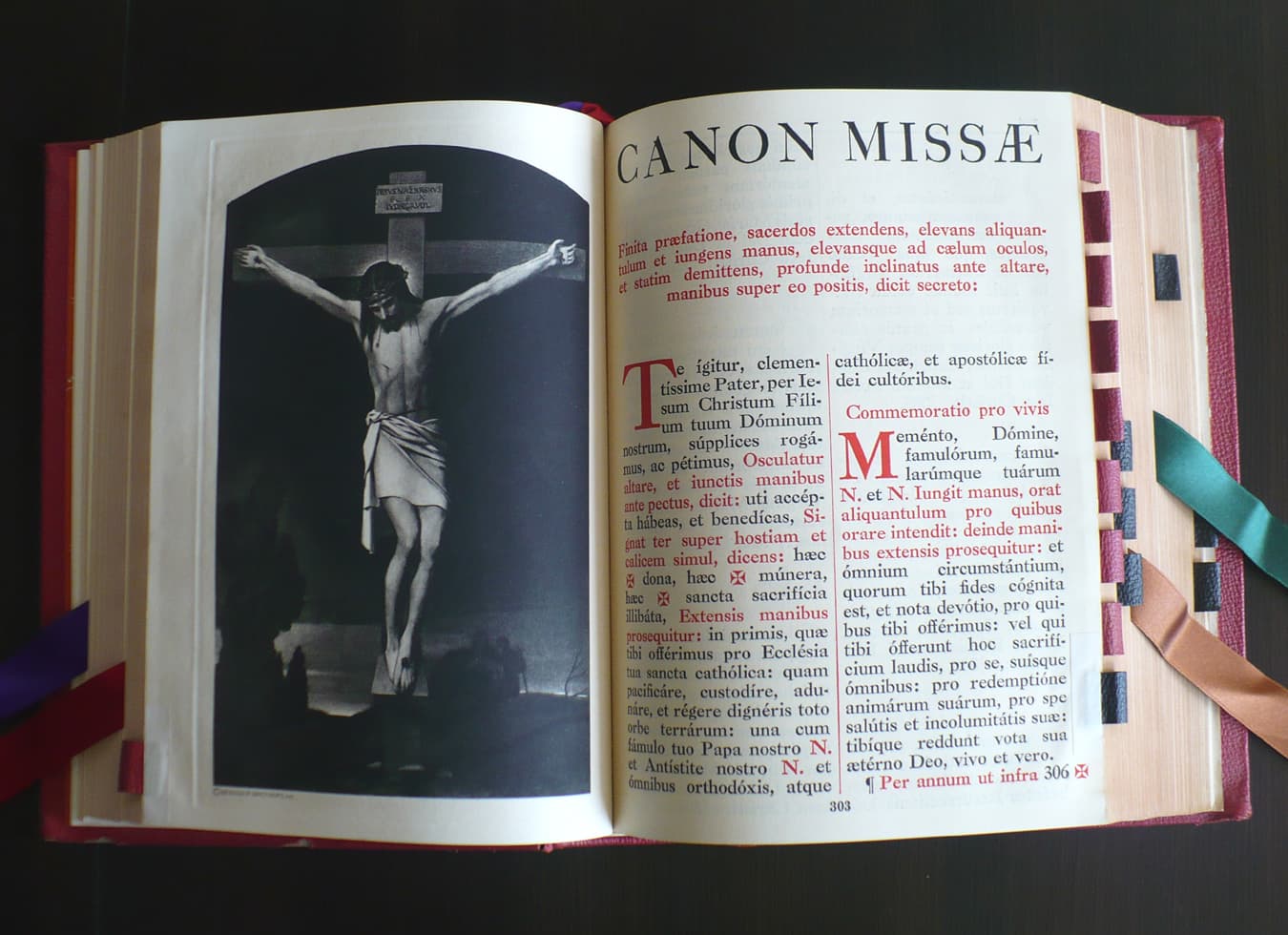
Why 1962 specifically
The Roman Missal has been revised many times across the centuries. The 1962 edition, issued by Pope John XXIII, was the last edition published before the Second Vatican Council's liturgical reforms — and it is the edition Pope Benedict XVI named explicitly, by year, in Summorum Pontificum (his 2007 document reopening wide access to the older Mass) as the standard for the Traditional Latin Mass. When someone today says "the 1962 Missal," they mean this specific, named text, not just "the old Mass" in general.
What's actually in the 1962 edition
It includes small changes Pope John XXIII made that year — most visibly, adding Saint Joseph's name to the Roman Canon, the main prayer of consecration at the heart of the Mass — along with simpler instructions for the priest carried over from changes made in the 1950s, including a revised set of Holy Week services from 1955. It is not identical to every missal used in past centuries; it is one specific point along a long, slow development, fixed as the reference edition by the 2007 document.
Does every Traditional Latin Mass use exactly this edition?
Nearly all do, since it is the edition named in current Church law. A small number of traditional communities use a slightly earlier edition, from before the 1955 Holy Week changes — a real but narrow difference most visitors will never notice.
What next
Find a Latin Mass
Search by city, diocese, country, or your location.
The Order of Mass
What happens, in order, with a plain explanation of each part.
Traditional Latin Mass vs. Novus Ordo
What's actually different between the two forms.
The Ad Orientem Report
Receive The Ad Orientem Report
Reporting, analysis, and important developments from the world of the Traditional Latin Mass. Weekly. Original sources. No outrage.